
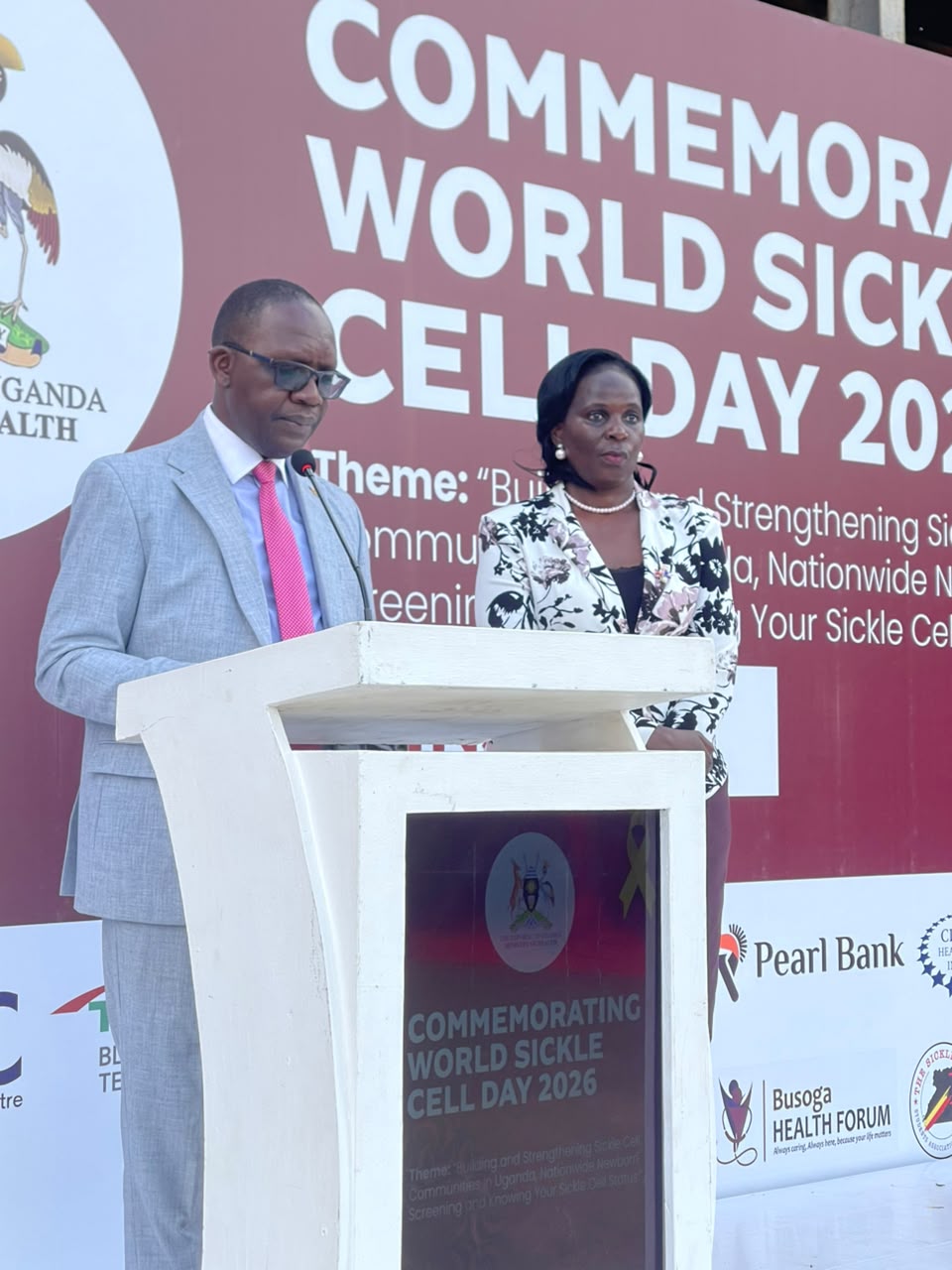
Health experts have raised concern over the high prevalence of sickle cell trait in the Busoga sub-region, where new findings show that 23 percent of the population carries the gene — significantly higher than Uganda’s national average of between 13 and 15 percent.
The findings, released by the Ministry of Health during the commemoration of World Sickle Cell Day in Jinja City, identify Busoga as the region with the highest sickle cell trait prevalence in Uganda, prompting renewed calls for urgent and sustained interventions.
The report is based on a recent study conducted between May 18 and June 18, 2026, during which 10,000 people were screened. According to Dr. Miriam Ajambo, the National Coordinator for Sickle Cell at the Ministry of Health, 23 percent of those tested were found to be carriers of the sickle cell trait.
“This means a significant proportion of the population are carriers and risk passing the trait to their children, especially when both parents carry the gene,” Dr. Ajambo explained.
To address the growing burden, the Ministry of Health, in partnership with organisations including the Joint Clinical Research Centre (JCRC), has launched a nationwide intervention campaign dubbed the Imara Framework, aimed at strengthening prevention, testing, and treatment services for sickle cell disease.
Uganda joined the rest of the world in marking World Sickle Cell Day under the theme of increasing public awareness, promoting early diagnosis, and improving access to treatment for people living with the condition.
Dr. Daniel Kyabayinze, the Director of Public Health at the Ministry of Health, who represented the Director General of Health Services, Prof. Dr. Charles Olaro, acknowledged that Busoga continues to face a significant sickle cell disease burden despite ongoing interventions.
“The ministry has decided to scale up the distribution of Hydroxyurea, a key drug in the management of sickle cell disease, to all health facilities across the country,” Dr. Kyabayinze said. “Uganda remains among the countries with a high prevalence globally, and we must intensify interventions.”
He added that the government has introduced mandatory sickle cell screening for all newborns to support early diagnosis and timely treatment.
At the regional level, Jinja Regional Referral Hospital continues to experience a high number of sickle cell patients. Dr. Alfred Yayi, Executive Consultant at the facility, revealed that more than 1,500 children with sickle cell disease are currently receiving care at the Nalufenya Children’s Wing, while an additional 726 patients are managed at the main hospital.
“Although malaria remains the leading health challenge in Busoga, sickle cell disease is a significant and growing burden, particularly in Jinja,” Dr. Yayi said.
He attributed the high prevalence to several factors, including limited public awareness, inadequate access to screening and diagnostic services, and inconsistent supplies of Hydroxyurea.
Dr. Yayi called for the decentralisation of sickle cell treatment services, proposing that Hydroxyurea be made available at lower-level health facilities such as Health Centre IIs to reduce congestion at referral hospitals.
He also highlighted the absence of a regional blood bank as a major challenge affecting emergency care.
“We have a blood collection centre at Jinja Regional Referral Hospital, but no blood bank. We depend on supplies from Nakasero or Mbale, which delays emergency response,” he said. “Government should expedite plans to establish a modern regional blood bank for Busoga, especially since land is already available.”
As Busoga grapples with the rising burden of sickle cell disease, stakeholders are calling for a multi-sectoral approach combining public awareness, prevention, early screening, and strengthened health systems to reverse the trend.
World Sickle Cell Day continues to provide an important platform to highlight the disease and mobilise action towards reducing its impact on affected communities.
